Selecting China best loading arms for viscous liquids requires more than comparing prices, materials, or catalog flow rates. Heavy oils, syrups, resins, and similar fluids behave differently as temperature changes. A loading arm that performs smoothly at 40°C may move painfully at 20°C. That difference affects pumping time, pressure loss, swivel stress, and operator safety.
So, How to optimize loading arm performance for high-viscosity liquids? Start with measured operating conditions. Record viscosity, density, temperature, flow rate, transfer distance, and required connection height. Then match the arm diameter, swivel design, seal material, and counterbalance system to those conditions. A larger bore may reduce pressure loss, but it can also increase weight and movement effort. Bigger is not always better.
Dr. George E. Totten, a recognized tribology and lubrication specialist, has emphasized, “Viscosity is strongly influenced by temperature and operating conditions.” That principle matters during equipment selection. Heating jackets, insulated piping, heat-traced couplers, and low-resistance swivels can maintain stable flow. However, heating must remain controlled. Excessive heat may damage the product, seals, or hose structure.
Field experience also shows that maintenance deserves equal attention. Inspect seals, swivel bearings, grounding connections, and flexible sections before loading begins. Keep records.
A small detail can cause a long delay.
This approach is not perfect. Product behavior may change between laboratory tests and real transfers. Therefore, pilot testing, supplier verification, and measured commissioning data should guide the final design. Reliable China loading arms come from evidence, not assumptions.
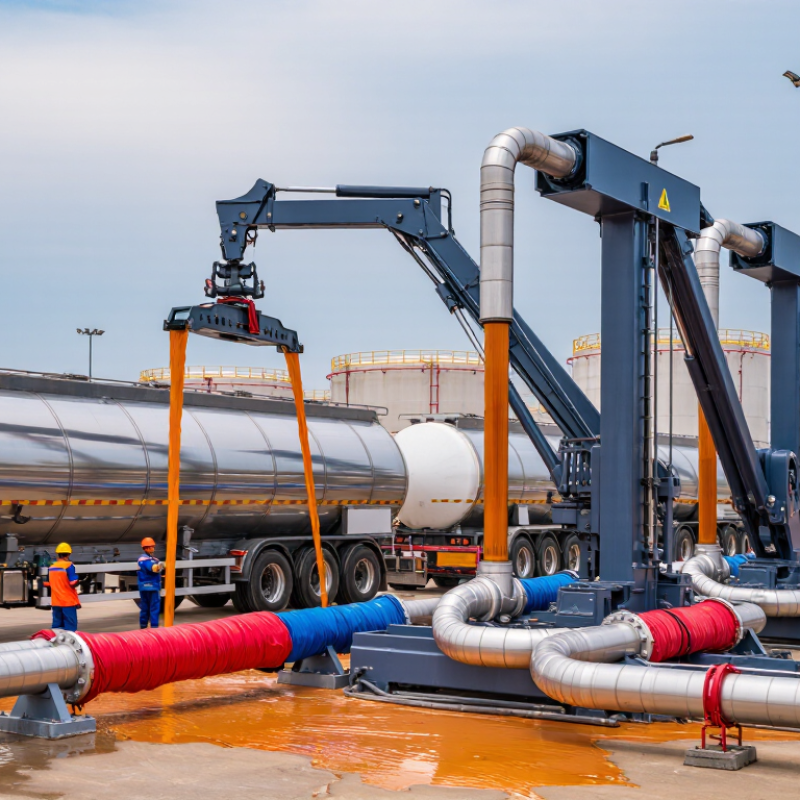
How to Optimize China Best Loading Arms for Viscous Liquids?
Understanding Viscous Liquid Loading Requirements in China
China’s National Bureau of Statistics recorded more than 700 million tonnes of crude oil processing in 2024. This scale increases pressure on loading terminals, especially when handling heavy oils, additives, and temperature-sensitive liquids. The IEA’s Oil 2024 report also identifies petrochemicals as a major source of future oil demand growth. Viscous cargoes will remain important.
Measure, do not guess.
A reliable loading arm design starts with viscosity at actual operating temperatures. A liquid flowing smoothly at 40°C may become extremely resistant at 15°C. Engineers should confirm flow rate, density, vapor pressure, solidification point, and allowable shear. These values determine pipe diameter, pump duty, swivel selection, and emergency shutdown response.
Heating needs careful control. Steam tracing may create hot spots, while electric tracing can offer more uniform temperature management. Insulation reduces heat loss during transfer, but it cannot replace proper preheating. Large-bore arms can lower pressure loss, although they may increase structural loads and operating torque. That trade-off is easy to underestimate.
Field commissioning often reveals imperfect assumptions. A laboratory viscosity value may not represent a cold morning at a northern Chinese terminal. Testing the complete arm, hose connection, pump, and product together is more dependable. Operators should also inspect swivel seals and drain points regularly. Small deposits can become serious restrictions.
| Design Dimension | Typical Requirement or Range | Effect on Loading-Arm Design | Recommended Optimization Approach | Verification Point |
|---|---|---|---|---|
| Dynamic viscosity | 1–10 mPa·s; 10–100 mPa·s; 100–1,000 mPa·s; above 1,000 mPa·s | Higher viscosity increases pressure loss, reduces achievable flow rate, and can make draining and vapor recovery more difficult. | Classify the liquid by its operating viscosity rather than its name alone. Use larger nominal pipe sizes, smoother internal passages, and lower-resistance swivel joints for higher-viscosity service. | Confirm viscosity at minimum, normal, and maximum operating temperatures, including start-up conditions. |
| Operating temperature | Product-specific; heated services commonly operate above ambient temperature to reduce viscosity. | Temperature affects viscosity, seal performance, thermal expansion, operator safety, and the need for insulation or heat tracing. | Specify the normal and maximum product temperature, provide insulated piping where required, and use controlled electric or fluid heat tracing when permitted by the hazardous-area design. | Check heat-tracing temperature limits against the product flash point, decomposition temperature, and material compatibility. |
| Loading-arm nominal size | Common process sizes include DN50, DN80, DN100, and DN150, selected according to flow rate and pressure drop. | A small bore reduces equipment cost but may create excessive pressure loss and long loading times for viscous liquids. | Increase the bore size when viscosity or required throughput is high. Avoid abrupt reducers, sharp elbows, and unnecessary dead legs. | Calculate pressure loss for the complete flow path, including the arm, swivel joints, valves, strainers, hoses, and couplings. |
| Target flow velocity | Often about 0.5–2.0 m/s for viscous products, subject to static control, product properties, and facility procedures. | Excessive velocity can increase pressure loss, turbulence, electrostatic charging, and mechanical wear. | Use a controlled ramp-up and ramp-down sequence. Select the lowest velocity that meets the required loading time and process capacity. | Confirm the allowable velocity with the liquid’s conductivity, flash point, vapor pressure, and the site earthing and bonding procedure. |
| Typical loading capacity | Approximately 20–150 m³/h for many viscous-liquid applications; the actual value depends on viscosity, temperature, pipe size, pump capacity, and pressure limits. | Nominal arm size alone does not determine capacity. Pump performance and system resistance can become the limiting factors. | Match the loading arm to the pump curve at the actual operating viscosity. Use a variable-speed pump or flow-control valve for stable operation. | Validate the design at the worst-case viscosity and lowest product temperature. |
| Pressure drop | Should be calculated for each operating condition rather than assigned a universal value. | Pressure loss rises as viscosity increases and can cause insufficient flow, pump overload, or cavitation risk. | Minimize the number of swivels, valves, bends, and restrictions. Select full-bore components where practical and keep the arm route short. | Compare calculated pressure drop with the available pump differential pressure and the maximum allowable working pressure of every component. |
| Pump selection | Positive-displacement pumps are often suitable for high-viscosity liquids; centrifugal pumps may be suitable when viscosity and flow conditions permit. | Pump type affects pulsation, shear, flow control, start-up torque, and the risk of running below the required net positive suction head. | Use a pump with adequate starting torque and a bypass or minimum-flow arrangement where required. Install suitable pressure protection downstream. | Check the pump curve using actual viscosity, density, temperature, suction conditions, and expected loading rate. |
| Swivel joints and seals | Must be rated for the product temperature, pressure, viscosity, chemical compatibility, and expected number of operating cycles. | Seals and bearings are exposed to pressure, movement, temperature changes, and possible product solidification. | Choose low-torque swivel joints with compatible seal materials. Provide replaceable seals and an inspection plan for high-cycle loading points. | Review seal compatibility with hydrocarbons, solvents, additives, acids, alkalis, or other chemicals in the product. |
| Heating and insulation | Recommended when the product viscosity rises significantly during cold weather, stoppage, or line drainage. | Inadequate temperature control can cause slow flow, blocked passages, high pump torque, and incomplete draining. | Insulate the arm and adjacent piping. Use temperature monitoring and independently controlled heat tracing where process conditions justify it. | Define the minimum temperature needed for safe pumping and confirm uniform heating at valves, swivels, couplings, and low points. |
| Drainability and dead legs | Drainable design is especially important for products that solidify, settle, or become more viscous during cooling. | Residual product can contaminate the next batch, increase cleaning time, and create blockage or environmental risks. | Provide sloped pipe runs, low-point drains, flush connections, and minimal dead legs. Position the arm so gravity-assisted drainage is possible after loading. | Confirm that the arm can be fully drained without exposing operators to trapped pressure or hot product. |
| Coupling and connection | Connection type should match the vehicle, railcar, ship, or fixed-pipeline interface and the product hazard classification. | The coupling influences connection time, leakage risk, residual product release, and maintenance requirements. | Use dry-disconnect or quick-connect arrangements where appropriate, with mechanical locking, pressure-relief provisions, and suitable gaskets. | Verify dimensional compatibility, maximum working pressure, emergency release requirements, and local operating procedures. |
| Vapor management | Required where the liquid releases hazardous, flammable, toxic, or odorous vapors during loading. | Vapor pressure and loading rate affect emissions, worker exposure, and the design of the vapor-return path. | Provide a dedicated vapor-return connection where required. Keep the vapor path adequately sized and avoid restrictions that could affect liquid loading. | Confirm vapor composition, expected volume, allowable backpressure, and the interface with the site vapor-treatment system. |
| Static electricity control | Important for flammable or low-conductivity liquids, especially during initial filling and high-speed transfer. | Static accumulation may create an ignition hazard in the presence of flammable vapor. | Bond and earth the loading arm, vehicle or container, and associated equipment. Use an interlock to prevent transfer when grounding is not confirmed. | Test continuity and grounding resistance according to the facility’s approved electrical and hazardous-area procedures. |
| Material selection | Common wetted materials include carbon steel, stainless steel, and compatible elastomers, selected according to the product. | Material compatibility affects corrosion resistance, contamination risk, service life, and seal reliability. | Select materials using the product’s chemical composition, water content, temperature, pressure, and cleaning chemicals. | Review corrosion allowance, weld quality, surface finish, gasket material, and any requirements for product purity. |
| Operator ergonomics | The arm should be movable by one operator within the required connection envelope and without excessive manual force. | High viscosity often increases the need for larger piping, heating, and heavier components, which can make positioning difficult. | Use balanced counterweights, spring assistance, powered positioning, or hydraulic assistance when arm size and reach require it. | Check reach, parking position, collision clearance, hose or pipe flexibility, and safe access in summer and winter conditions. |
| Safety interlocks | Common functions include grounding confirmation, coupling confirmation, valve sequencing, emergency shutdown, and overfill protection. | Interlocks reduce the likelihood of starting transfer with an unsecured connection, open drain, or unsafe vehicle condition. | Integrate the loading arm with the site control system and define fail-safe positions for valves and emergency shutdown devices. | Perform functional testing under normal, alarm, power-loss, and emergency-stop conditions. |
| Weather and site conditions in China | Design may need to address cold northern winters, hot southern summers, humidity, rain, dust, coastal salt, and temperature cycling. | Climate affects seal life, insulation, corrosion, instrument reliability, and the viscosity of the transferred product. | Specify the actual site ambient range, corrosion category, enclosure protection, drainage, coating system, and winterization requirements. | Use site-specific environmental data rather than a generic ambient assumption, especially for coastal, plateau, or cold-region installations. |
| Inspection and maintenance | Routine checks should cover swivel leakage, seal wear, arm balance, grounding continuity, coupling condition, valves, and heat-tracing performance. | Viscous products can conceal leakage, restrict movement, and leave deposits that increase operating torque. | Establish inspection intervals based on operating cycles, product temperature, corrosiveness, and loading frequency. Keep critical seals and gaskets available. | Record leakage, pressure, flow, temperature, operating torque, and loading time to identify performance deterioration. |
| Performance acceptance test | Test at representative viscosity, temperature, flow rate, pressure, and operating position. | A test using only low-viscosity water may not reveal actual pressure loss, heating, draining, or operator-force issues. | Conduct a documented factory and site acceptance test with the intended product or a validated equivalent fluid. | Confirm flow stability, pressure drop, leakage tightness, emergency shutdown, grounding, drainability, and connection time. |
Measure viscosity at the real operating temperature.
A liquid may flow at 40°C but resist movement at 15°C.
Jacketed piping, steam tracing, or electrical tracing can maintain temperature.
A larger pipe can reduce pressure loss, but it may increase structural loads and operating torque.
Include pressure relief, grounding, emergency shutdown, and breakaway protection.
Flush the line after loading and monitor temperature, pressure, and filter changes.
Check seal condition, swivel torque, flange alignment, counterbalance movement, and drain points.
A 12% increase may suggest residue, hardened seals, or restricted piping.
Record product temperature, flow rate, pressure drop, cycle time, and pump behavior monthly.
Optimizing loading arms for viscous liquids in China requires a clear understanding of product characteristics, transfer temperatures, flow targets, and site conditions. The right design should accommodate high resistance to flow through suitable pipe diameters, smooth internal surfaces, flexible joints, and effective drainage. Heating systems may be needed to reduce viscosity, while properly selected pumps, valves, and flow meters help maintain stable transfer rates and minimize pressure fluctuations. A practical approach begins with matching the loading arm configuration to the liquid’s viscosity range and operating environment.
How to optimize loading arm performance for high-viscosity liquids? Focus on coordinated heating, pumping, flow control, and safe operating procedures. Insulation, temperature monitoring, emergency shutoff devices, grounding, and leak prevention measures support reliable loading. Regular inspection of seals, swivel joints, hoses, heating elements, and control components can identify wear before it affects performance. By recording transfer times, pressure changes, energy use, and maintenance results, operators can evaluate long-term efficiency and make informed improvements while maintaining safe and consistent loading operations.

 Liftora Arm